How to Read an Oil Dipstick: Levels, Colors & What They Mean (With Photos)
 Drashco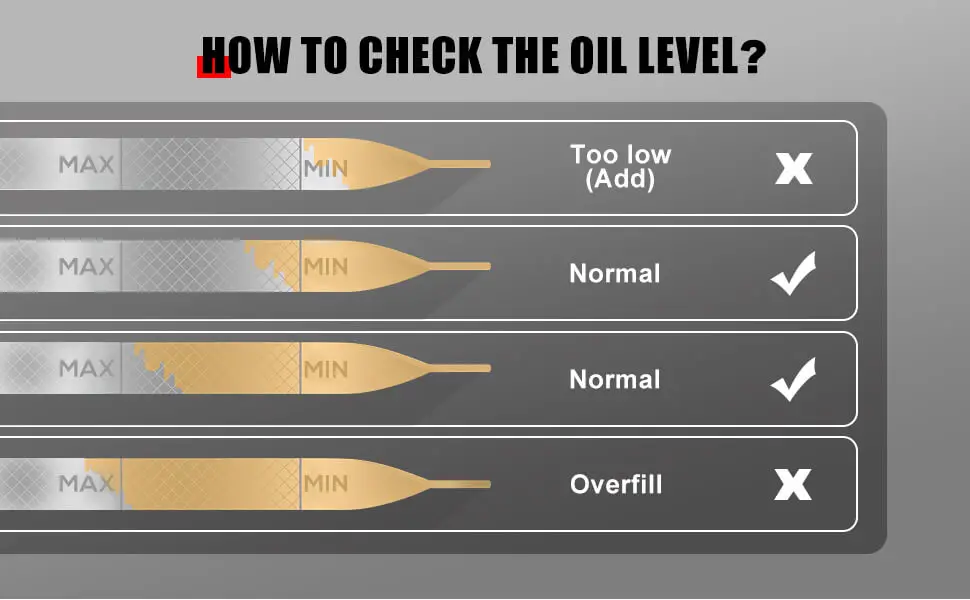
Your engine is running. Everything feels fine. But that nagging thought — when did I last check the oil? — won't go away.
Here's the truth: checking your oil with a dipstick takes 3 minutes and can save you a $4,000 engine rebuild. Yet most people either don't know how to read one properly, or they're not sure what they're looking at when they pull it out.
In this guide I'll show you exactly how to read an oil dipstick — not just the level, but the color, consistency, and what each combination means for your engine's health.
Let's dive right in.
In this guide, you'll learn:
How to Read the Oil Level — Step by Step
- Park on a level surface. Checking on a slope gives a false reading — the oil pools to one side.
- Turn off the engine and wait 10–15 minutes. Hot oil splashed around the engine needs time to drain back into the sump. Checking immediately after driving will give you a low reading.
- Open the hood and locate the dipstick. It usually has a brightly colored handle — yellow, orange, or red — with an oil can symbol. On most cars it's on the side of the engine block.
- Pull out the dipstick and wipe it clean with a clean rag or paper towel. This clears any oil splash from the reading area.
- Reinsert the dipstick fully — push it all the way in until it seats completely.
- Pull it out again slowly and hold it horizontal. Look at where the oil film ends on the stick.
- Read the level. The oil should be between the MIN (or L) and MAX (or H/FULL) marks. Ideally close to MAX, but anywhere in the safe zone is acceptable.
Important: Always wipe and re-dip. The first pull gives a splashed reading. The second pull gives the true level.
Understanding Dipstick Marks: What Do They Mean?
Different cars mark their dipsticks differently, but they all communicate the same information:
| Marking | What it means | Action needed |
|---|---|---|
| At or near MAX / FULL / H | Oil level is correct | Nothing — you're good |
| Between MIN and MAX | Oil level is acceptable | Monitor; top up if closer to MIN |
| At or below MIN / LOW / L | Oil is low | Add oil now — do not drive far |
| Below the bottom mark | Critically low oil | Do not start the engine. Add oil immediately. |
| Above MAX | Overfilled | Drain excess oil — overfilling damages seals |
Most dipsticks also have two holes or notches that define the safe zone. The distance between MIN and MAX typically represents about 1 litre (1 US quart) of oil. So if you're at MIN, add 1 litre, then re-check.
What Does Oil Color Tell You?
The level is only half the story. The color and consistency of the oil tells you about its condition — and sometimes about hidden engine problems.
| Color / Appearance | What it means |
|---|---|
| Amber / light brown, transparent | Fresh or recent oil change — excellent |
| Dark brown, still fluid | Normal used oil — fine unless overdue for a change |
| Black, thick | Overdue for an oil change — change soon |
| Milky / creamy / grey | Coolant contamination — possible head gasket leak. Do not drive. Get it inspected immediately. |
| Frothy / foamy bubbles | Air or water contamination — serious issue |
| Gritty / metallic particles | Internal engine wear — immediate inspection needed |
| Very thin, watery consistency | Fuel contamination — possible injector fault |
The milky color is the one that should make you stop immediately. It almost always means coolant is mixing with oil — typically from a failed head gasket. Driving with this will destroy your engine within miles.
How Often Should You Check?
Old advice said every oil change. Modern advice says more often:
- Once a month for most normal driving
- Before every long trip (highway driving accelerates oil consumption)
- Every 1,000 miles if your car is older or known to consume oil
- Immediately if you see the oil pressure warning light (that's already critical)
Some newer cars have electronic oil level monitors and don't have a traditional dipstick at all (many BMWs, newer Mercedes, some VWs). On those vehicles, trust the dashboard indicator — but also know that electronic sensors can fail.
Dipstick Reading Tips by Car Model
How to read the Honda Civic / Accord oil dipstick
Honda dipsticks have two holes punched through the metal strip — the lower hole is MIN, the upper hole is MAX. The oil should cover the lower hole and ideally reach close to the upper hole. Honda engines are known to consume a small amount of oil between changes, especially the 1.5T and 2.0T engines — checking monthly is wise.
How to read the orange Honda dipstick
Several Honda models use an orange or yellow dipstick handle. The reading procedure is identical — two reference holes defining the safe zone. The color of the handle is just for visibility; it doesn't indicate anything special about the oil specification.
How to read the Toyota Corolla / Camry oil dipstick
Toyota dipsticks typically show a crosshatched zone between two marks — keep the oil within that zone. Toyota engines are generally very conservative with oil consumption; if you're losing more than 1 litre per 5,000 km, investigate why.
How to read the Chevy Silverado / GMC oil dipstick
GM trucks use a dipstick with a cross-hatched area between FULL HOT and ADD marks. The area represents approximately 1 US quart. Check when the engine is fully warm for the most accurate reading — cold checks on a large V8 can read slightly lower than reality.
BMW and cars without a dipstick
Many newer BMW models (3 Series, 5 Series from around 2007+) do not have a traditional dipstick. They use an electronic oil level sensor. To check: ignition on, engine off, navigate to oil level in the on-board computer. Wait for the reading to stabilize — it takes about 30 seconds.
Frequently Asked Questions
Should I check oil when engine is hot or cold?
Cold is most accurate — wait 10–15 minutes after turning off a warm engine. This lets all the oil drain back to the sump. Checking immediately after driving can give a reading 0.5–1 litre lower than the true level.
What does it mean if the dipstick shows oil above MAX?
Your engine is overfilled. This is actually a problem — excess oil gets whipped into foam by the crankshaft, which reduces its lubricating ability and can damage seals. Drain the excess until the level is between MIN and MAX.
How much oil should be between MIN and MAX on a dipstick?
Typically about 1 litre (1 US quart). This varies slightly by engine size, but if you're at MIN, adding 1 litre will bring you close to MAX on most cars.
What if I can't find my dipstick?
Some modern cars (many BMWs, some Mercedes, newer VW/Audi) have eliminated the physical dipstick in favor of an electronic sensor. Check your owner's manual — it will tell you how to read the oil level through the instrument cluster.
My oil is black — does that mean I need a change?
Not necessarily immediately. Oil darkens through normal use — it's actually doing its job by holding combustion byproducts in suspension. Check your last change date and mileage. If you're within the recommended interval, black oil alone isn't cause for alarm. If it's overdue, change it soon.