Chevy Silverado Fuel Pump Reset Switch: Where Is It? (Truth by Year)
 Drashco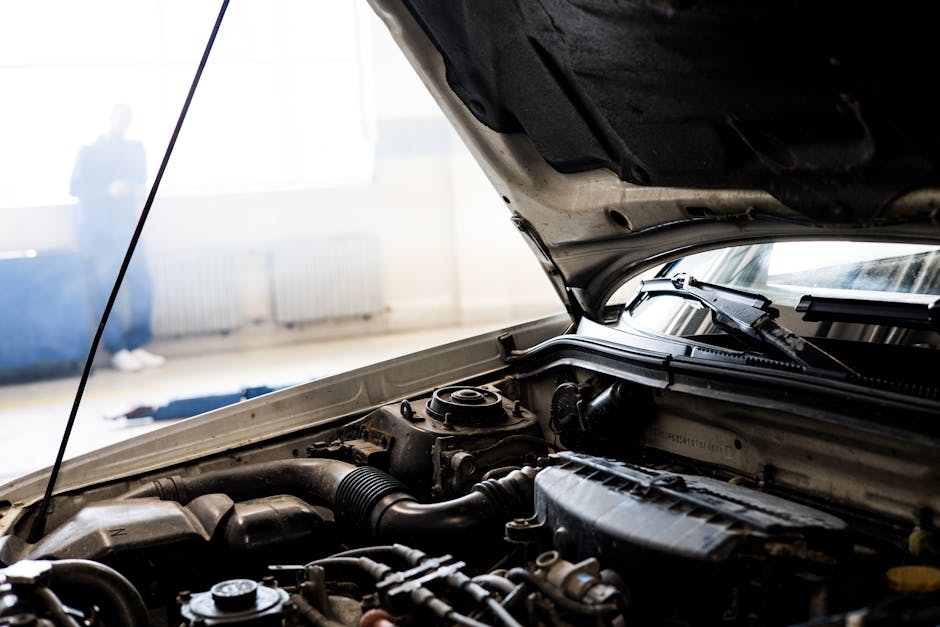
Short answer: Your Chevy Silverado does not have a fuel pump reset switch. No year, no generation, no trim level. GM does not use them on Silverados.
If your Silverado will not start after a bump, crash, or out of nowhere: it is almost certainly the fuel pump relay (5 minutes to swap), a dead fuel pump (2 hours DIY), or a crank sensor. Keep reading — we will show you what to check.
Just about every week, someone in a Silverado forum asks where the fuel pump reset switch is. Nine times out of ten, they have been reading a guide written for a Ford, and they are chasing a part that does not exist on their truck.
This page sets the record straight: what your Silverado actually has in place of a fuel-cut-off switch, how it works, and the exact things to check when your Silverado cranks but will not start. Covers every generation from the 1999 GMT800 to the current T1 platform.
In this guide:
Why the Silverado Has No Fuel Pump Reset Switch
In the 1980s and 1990s, Ford and Chrysler fitted "inertia switches" (fuel cut-off switches) to most of their cars — a mechanical switch in the trunk or kick panel that tripped open during a crash and cut power to the fuel pump. After the accident, the driver could press a red button to reset it.
GM took a different approach. Instead of a mechanical switch, GM uses a software-based crash detect in the Powertrain Control Module (PCM) combined with a relay-controlled fuel pump circuit. When the airbag sensor detects a deployment-worthy impact, the PCM opens the fuel pump relay and keeps it open until the ignition is cycled AND no crash flag is stored.
This is why every Silverado since 1999 has used the same architecture:
- Fuel pump powered through the fuel pump relay in the under-hood fuse box
- Relay controlled by the PCM (Powertrain Control Module)
- PCM reads crash data from the SDM (Sensing and Diagnostic Module — the airbag computer)
- No physical button to press — you reset by fixing the underlying fault and clearing codes
For Ford and European vehicles that DO have a physical reset switch, see our fuel cut-off switch location guide covering 20+ car makes.
What Silverados Have Instead — By Year
| Silverado Generation | Years | Fuel Cut-Off Mechanism |
| GMT800 (1st gen) | 1999–2007 classic | PCM-controlled relay; no physical switch |
| GMT900 (2nd gen) | 2007–2013 | PCM-controlled relay + body-control module crash flag |
| K2XX (3rd gen) | 2014–2018 | PCM relay + OnStar crash signal + BCM override |
| T1 (4th gen) | 2019–present | Same as K2XX, now with direct CAN-bus crash flag |
Regardless of generation, the answer to "where is the reset switch?" is the same: there is not one. What there is: a fuel pump relay in the under-hood fuse box that you can swap in 30 seconds to isolate whether the fuel pump itself has failed.
3 Things to Actually Check When Your Silverado Cranks but Will Not Start
1. Fuel pump relay (80% of cases)
The relay is cheap, simple, and the first thing that fails. The Silverado's relay failure rate climbs significantly past 120,000 miles, especially in hot climates where the relay sits in the under-hood fuse box cooking on every summer day.
How to test: pop the hood, open the under-hood fuse box (driver's side on most Silverados), identify the fuel pump relay (labeled on the fuse box lid), swap it with an identical-pinout relay from the A/C compressor slot or the horn slot. If the truck starts after the swap, the relay is dead. Replacement: $6–$15 at any parts store.
2. Fuel pump itself (15% of cases)
If the relay is good (you can hear it click when you turn the key to RUN), the pump itself may be dead. Silverado fuel pumps live 120,000–200,000 miles on average, but running the tank below a quarter regularly shortens that dramatically.
How to test: with the key at RUN (engine off), listen at the fuel filler neck for a 2-second priming whir. If silent, check the relay first, then the pump. Replacement is $120–$250 for the pump module and a 2-hour DIY.
3. Crank position sensor or crash flag stuck (5% of cases)
After a minor fender-bender that did not deploy the airbags, some Silverados (especially 2014+ K2XX) still set a "crash event stored" flag in the BCM. The PCM then keeps the fuel pump relay open until the flag is cleared with a scan tool.
How to test: scan with an OBD-II tool that reads body/chassis codes. Look for any B-codes (body codes) or U1000 series. If you see a crash-event flag, clear it with the tool. Separately, a bad crank position sensor will prevent start but the fuel pump will still prime — the engine cranks without catching, and no misfire codes are thrown.
Fuel Pump Relay Location by Year
| Years | Relay Box | Slot Position |
| 1999–2006 | Under-hood fuse box (driver's side) | Labeled "FP RLY" or "FUEL PUMP" |
| 2007–2013 | Under-hood fuse box (driver's side, larger) | "FUEL PUMP RELAY" — usually slot 40 or 41 |
| 2014–2018 | Under-hood fuse box (driver's side, with lid diagram) | "Fuel Pump" — slot varies by 5.3L/6.2L/4.3L engine |
| 2019–present | Under-hood fuse box (with ice-breaker cover) | "F-PUMP" — open the lid, slot is labeled |
All generations use a standard 5-pin ISO mini-relay. Common replacement part numbers: GM 15321059, AC Delco D1750C, Standard Motor Products RY-601. Any one of them works on any Silverado 1999–2024.
Diagnosis Order (15 Minutes, No Special Tools)
- Turn the key to RUN (engine off). Listen at the filler neck or behind the rear passenger seat for a 2-second fuel pump prime. No sound = no power to the pump.
- Open the under-hood fuse box. Pull the fuel pump relay. Swap with an identical relay from the A/C compressor or horn slot. Try to start. Starts? Relay was bad — replace.
- Check the fuel pump fuse (usually in the same box, one slot over from the relay). Pull and inspect the element. Blown? Replace it — if it blows again immediately, the pump or its wiring is shorted.
- Connect an OBD-II scanner. Read all stored codes. Any of the following narrow things down:
- P0087 — fuel rail pressure too low (pump or pressure regulator)
- P0230 / P0231 — fuel pump circuit issue (wiring or PCM driver)
- B0000-series — check for a stored crash flag (BCM or SDM)
- U1000 or U0100 — CAN bus fault preventing PCM from commanding the relay
- If relay clicks but no prime: the pump itself is the likely culprit. Confirm with a direct 12V test at the pump connector (safe, under-seat access on most Silverados).
After an Accident: What Really Happens
If you have just been in a fender-bender and your Silverado will not start, the assumption that you need to "reset the fuel pump" is what leads people to search for a switch that does not exist. Here is what actually happens on a Silverado after a crash:
- Airbag deployed: SDM sets a crash flag, PCM opens the fuel pump relay. Starting requires a scan tool to clear the flag AND a diagnostic check to confirm no safety systems are compromised. This is NOT a DIY repair — your truck goes to a dealer or body shop.
- Airbag did NOT deploy but impact was significant: in rare cases the SDM sets a "minor event" flag. Truck may crank-no-start for a couple of hours and then start normally after a full sleep cycle of the BCM (disconnect the battery for 15+ minutes).
- Minor bump, no airbag trigger: the fuel pump is almost never cut. If the truck will not start, the cause is probably unrelated — loose battery terminal from the jolt, or a kicked loose wire.
In none of these scenarios is there a button you can press to "reset" the fuel pump. GM deliberately chose software over a physical button so that after an accident, the truck has to be inspected before being driven again.
Frequently Asked Questions
Is there a fuel pump reset button on a 2002 Chevy Silverado?
No. The 2002 Silverado (GMT800 generation) does not have a fuel pump inertia switch or reset button. The fuel pump is controlled by the PCM through a relay in the under-hood fuse box. If your 2002 Silverado will not start, check that relay first.
Where is the fuel pump reset button on a 2006 Chevy Silverado?
It does not exist. The 2006 Silverado uses the same PCM-relay architecture as every other Silverado. If someone tells you to "check the inertia switch under the driver's kick panel," they are confusing your truck with a Ford. Check the fuel pump relay instead.
How do I reset the fuel pump on a 2014 Silverado after a minor accident?
There is no manual reset. If the SDM set a crash flag, a dealer or shop with a scan tool that reads BCM/SDM codes will need to clear it. Disconnecting the battery for 15–20 minutes sometimes clears minor-event flags on 2014+ trucks, but not crash-deployment flags. If your airbags deployed, take the truck to a shop — do not attempt to drive it before it is inspected.
My Silverado was tapped in a parking lot and now it will not start. What do I do?
Check the simple stuff first: battery terminals may have loosened from the impact. Pop the hood, wiggle both terminals — any movement means the clamp is loose, tighten it. If terminals are tight, swap the fuel pump relay with a known-good one from the A/C compressor slot. If that does not solve it, scan for codes.
Can I disable the PCM crash cut-off mode on my Silverado?
No, and you should not want to. The crash cut-off is a safety feature that prevents fuel from being pumped into a leaking line after an accident. Disabling it is both illegal (FMVSS non-compliance) and dangerous (fire risk after an accident).
Where is the fuel pump fuse on my Silverado?
In the under-hood fuse box, driver's side. The exact slot varies by year and engine:
1999–2006: slot 33 or 34, usually 20A
2007–2013: slot 40 or 41, 20A
2014–present: check the fuse box lid diagram — location moved per engine (5.3L vs 6.2L vs 4.3L)
If the Silverado does not have a reset switch, why do I see videos claiming it does?
YouTube and parts-seller blogs are full of copy-pasted guides written for Ford vehicles that were never corrected for GM platforms. If you watch a video and see a red button in a trunk or kick panel, that is a Ford F-150 — not a Silverado. Silverados have never had this part.
Related Fuel Cut-Off / Inertia Switch Guides
- Master Guide — 20+ Car Makes
- Cars Without a Fuel Cut-Off Switch
- Ford Fiesta Inertia Switch
- Ford Ranger Inertia Switch
- Renault Clio Fuel Cut-Off
- Renault Megane Inertia Switch
- Peugeot 206 Fuel Cut-Off
- Chevrolet Silverado Fuel Pump Reset
🔧 Try our free Fuel Cut-Off Switch Finder — pick make + model and get the exact location, reset steps, and full guide in 5 seconds. Covers 25+ models. Open the tool →