P0420 Code: Catalyst System Below Threshold (Bank 1) — Causes & Cost
 Drashco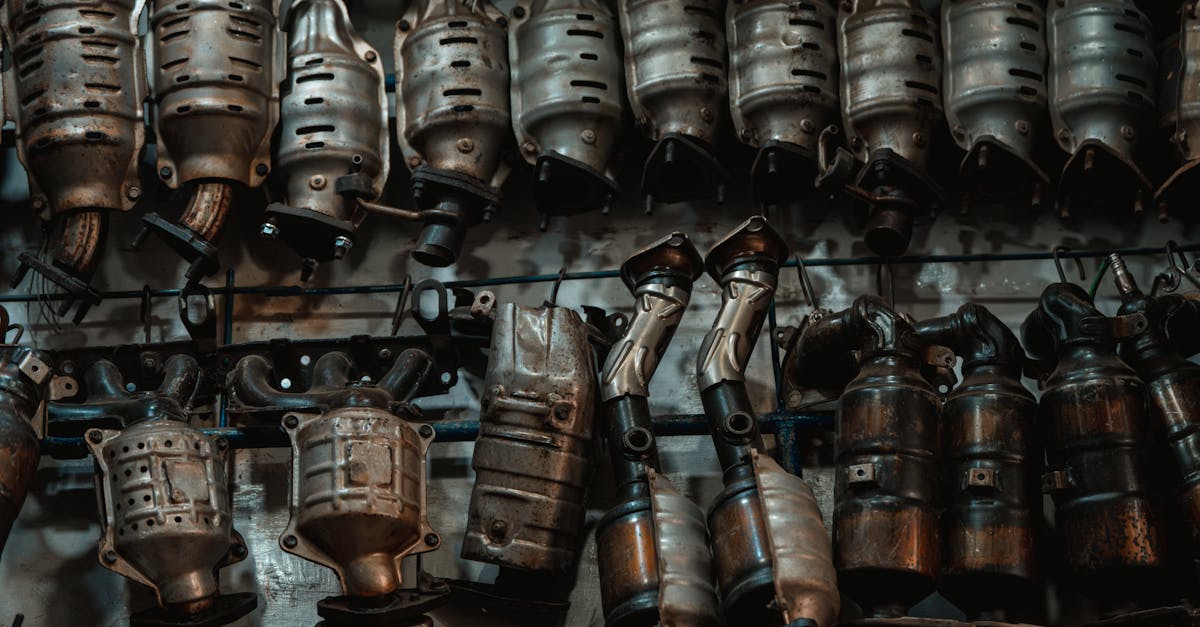
P0420 means: Catalyst System Efficiency Below Threshold (Bank 1). The downstream O2 sensor is reading too similarly to the upstream — meaning the catalytic converter isn't scrubbing emissions like it should.
Most common fix: 60% = failing catalytic converter ($800–$2,500 OEM, $200–$600 aftermarket). 25% = bad downstream O2 sensor ($60–$120). 10% = exhaust leak. 5% = upstream rich/lean issue.
The fast first test: Replace the downstream O2 sensor first ($60–$120, 30 minutes). Often clears P0420 without replacing the cat at all.
P0420 is one of the most expensive-feeling Check Engine codes because the "official" diagnosis is usually "your catalytic converter is failing — that'll be $1,500." But the reality is that 25% of P0420 codes are caused by a $60 oxygen sensor, not the cat. This guide walks you through the diagnosis in the right order so you don't buy a $1,500 catalyst you didn't need.
In this guide:
What P0420 Means
P0420 reads as "Catalyst System Efficiency Below Threshold (Bank 1)". Modern engines have two oxygen sensors per exhaust bank:
- Upstream O2 sensor — measures unburned oxygen exiting the engine (used for fuel trim).
- Downstream O2 sensor — measures oxygen after the catalytic converter (used for cat health monitoring).
A healthy catalytic converter consumes oxygen during NOx reduction. So the downstream O2 sensor signal should be relatively flat — much smoother than the rapidly-toggling upstream sensor. If both signals start looking similar (both toggling rapidly), the ECU concludes the cat isn't consuming oxygen anymore = degraded catalyst = P0420.
"Bank 1" means the cylinder bank containing cylinder #1. On inline engines, Bank 1 is the only bank. On V engines, it's typically the front bank (V6 transverse) or driver-side (V8 longitudinal).
Symptoms
- Check Engine Light on solid
- Slight loss of fuel economy (5-10% if cat is partially clogged)
- Slight loss of power on hard acceleration (rare unless cat is severely degraded)
- Rotten-egg smell from exhaust if cat is internally collapsing
- "Rattle" sound from underneath if cat ceramic substrate has broken into pieces
- No drivability change in most cases — engine runs normally
Causes Ranked by Frequency
1. Failing catalytic converter — 60% of cases
Cats degrade slowly over 100,000–150,000 miles. Symptoms: P0420 stays after clearing; downstream O2 mirrors upstream on a scope. Replacement is the only true fix when the cat is actually dead.
2. Bad downstream O2 sensor — 25% of cases
The downstream sensor itself fails (lazy response, stuck-low, contaminated). The cat is fine, but the ECU thinks it's not because the sensor reading is wrong. This is the cheap fix that solves a quarter of all P0420 codes — try this first.
3. Exhaust leak before/at the converter — 10% of cases
Cracked exhaust manifold, loose downpipe, or pinhole leak in the cat housing. Pulls in fresh air, fooling sensors. Symptom: hissing / ticking at idle, often with a P0420 + lean code combo.
4. Engine running rich/lean upstream — 5% of cases
Fuel trim issues (P0171, P0172) eventually destroy a cat. If P0420 appears with P0171 or P0172, fix the lean/rich issue first — replacing the cat without fixing fuel trim will just kill the new cat.
Step-by-Step Diagnosis (Right Order)
- Read all stored codes with an OBD-II scanner. If P0420 appears alongside P0171 (lean), P0172 (rich), or P0300 (misfire) — fix those first. Replacing the cat without fixing fuel trim is throwing money away.
- Watch live O2 sensor data. Upstream should toggle 0.1V to 0.9V multiple times per second. Downstream should be relatively flat near 0.7V. If downstream is also toggling rapidly = cat is failing. If downstream is stuck at 0.45V or always reading similarly to upstream = downstream sensor is bad.
- Replace the downstream O2 sensor first. $60–$120 part, 30 minutes. Drive a full warm-up cycle and see if P0420 returns. If it doesn't come back in 200 miles, you're done.
- Check for exhaust leaks. Listen for ticking at idle. Inspect manifold and downpipe gaskets. A smoke test reveals pinhole leaks.
- Confirm cat temperature with an infrared thermometer. Inlet should be 100–200°F cooler than the outlet on a healthy cat. Equal temps = dead cat.
- Last resort: cat replacement. $200–$600 aftermarket / $800–$2,500 OEM. Only if all the above are ruled out.
Repair Cost Breakdown
| Fix | DIY cost | Shop cost |
| Downstream O2 sensor (Bank 1) | $60–$120 | $180–$320 |
| Exhaust leak repair (gasket / clamp) | $15–$60 | $120–$280 |
| Catalytic converter (aftermarket universal) | $200–$400 | $500–$900 |
| Catalytic converter (OEM direct-fit) | $800–$2,500 | $1,200–$3,500 |
| Cat with extended warranty (e.g., MagnaFlow) | $400–$700 | $700–$1,200 |
Pro tip: Aftermarket cats from MagnaFlow or Walker are 50% the cost of dealer OEM and come with 5-year warranties. Avoid the cheapest universal cats from random sellers — they often fail emissions testing within 6 months.
Frequently Asked Questions
Can I drive with P0420 active?
Yes, indefinitely. P0420 doesn't affect drivability and you won't notice anything beyond the Check Engine Light. The downside: you'll fail emissions testing in any state with OBD-II inspections.
Will P0420 fail emissions testing?
Yes in OBD-II markets. Active P0420 = automatic fail. Code must be cleared and not return after a full drive cycle (typically 50+ miles of mixed driving) to pass.
Will an "O2 sensor spacer" or "cat defouler" solve P0420?
It can mask the code, but it's not a real fix. These devices physically space the downstream O2 sensor away from the exhaust flow so it reads less reactive. Cheap (~$15) and works for 50% of cases. NOT legal in many emissions-testing states because it's technically tampering with emissions equipment.
Can I just delete the cat with a tune?
Technically yes. Practically: illegal in most US states (federal Clean Air Act §203 violation, fines up to $4,000 per vehicle), causes immediate emissions test failure, and most modern cars' ECUs need a custom tune to suppress the code without throwing other faults. Not recommended for daily-driver cars.
What's the difference between P0420 and P0430?
P0420 = Bank 1 cat below threshold. P0430 = Bank 2 cat below threshold (engines with 2+ banks). Same fault mechanism, different cat. If you see both = both cats degrading, very common past 150,000 miles.
Will replacing both upstream AND downstream O2 sensors fix P0420?
Sometimes. About 30% of P0420 codes are caused by either or both O2 sensors. If your sensors are 100,000+ miles old and you're seeing P0420, replacing both for ~$200 is a worthwhile gamble before committing to a $1,500 catalyst.
Related OBD Guides
- C0561 — Traction Control Code
- C0281 — Brake Switch Code
- P0171 — System Too Lean
- P0300 — Random Cylinder Misfire
- U0100 — Lost Comm With ECM
🔧 Try our free OBD-II Code Lookup Tool — search 38+ codes instantly, see top causes ranked by frequency, and get the most-common fix in 5 seconds. Open the tool →