Renault Kangoo Fuel Cut-Off Switch Location & Reset Guide (Mk1, Mk2, Mk3)
 Drashco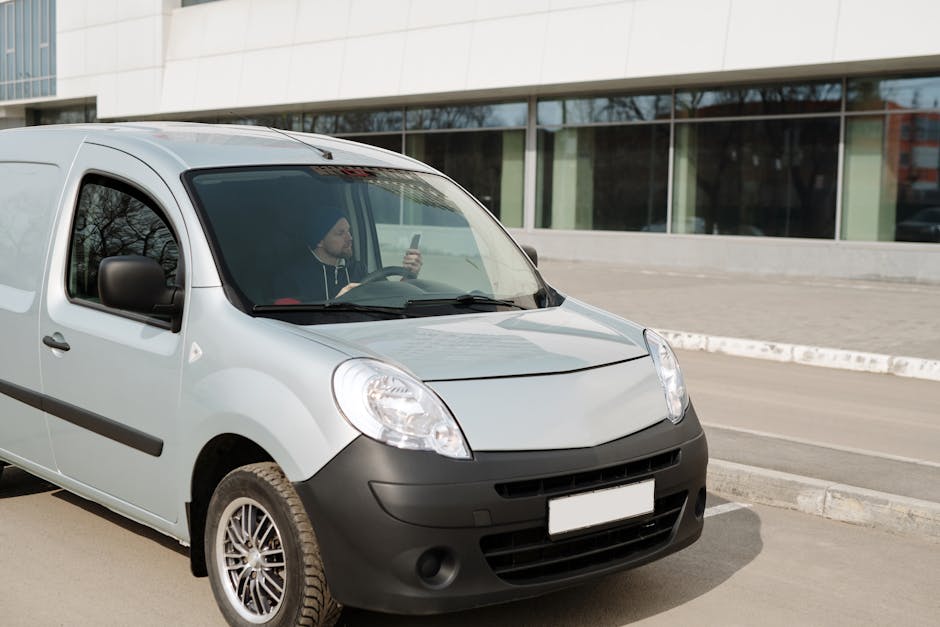
Renault Kangoo fuel cut-off switch location: Passenger footwell on Kangoo I (1997–2008); behind the passenger-side glove box on Kangoo II (2008–2021) and Kangoo III (2021+).
Reset: Press the red plunger firmly until it clicks flush. Turn ignition ON for 10 seconds, then start.
The Renault Kangoo is one of the most popular light commercial vans in Europe, which means it spends a lot of time navigating loading bays, rough delivery yards, and poorly maintained industrial estates. All of which are exactly the kind of environment where the fuel inertia switch trips unexpectedly. If your Kangoo suddenly will not start in the middle of a route, this 30-second reset is often all you need.
In this guide:
What the Kangoo Inertia Switch Does
The inertia switch (Renault calls it the "coupe-circuit de pompe à carburant" in French workshop documentation) is a mechanical cut-out wired between the ignition switch and the fuel pump. Inside the sealed cylinder is a weighted ball held in place by a magnetic detent. A sudden deceleration — crash, kerb strike, hard pothole — dislodges the ball, which breaks the circuit and cuts power to the pump. The engine loses fuel pressure within seconds and shuts down.
On commercial vans, it is not uncommon for the switch to trip during loading operations — a pallet truck bumping the cargo floor, a forklift touching the bumper, even a heavy item dropped into the load area can generate enough jolt. Many Kangoo fleet operators carry a spare reset tool in the glove box for exactly this reason.
For how inertia switches work across 20+ car and van makes, see our master fuel cut-off switch guide.
Location by Kangoo Generation
| Generation | Years | Location |
| Kangoo I (phase 1) | 1997–2003 | Passenger footwell, under the carpet, near the firewall. Lift the carpet from the sill side |
| Kangoo I (phase 2 facelift) | 2003–2008 | Same as phase 1 — passenger footwell |
| Kangoo II | 2008–2021 | Behind the passenger-side glove box, mounted on the firewall. Drop the glove box to access |
| Kangoo III | 2021+ | Same location as Kangoo II — behind glove box. New layout shared with Renault Express and Mercedes Citan (rebadged Kangoo) |
| Kangoo E-Tech Electric | 2022+ | No fuel inertia switch — BEV |
Kangoo I — Footwell access (1997–2008)
Open the passenger door. Slide the passenger seat all the way back (or remove the seat-back latch pin if it is a three-seat front bench). Fold back the carpet from the door sill, exposing the footwell floor pan. You will see a metal or plastic bracket holding a black cylindrical device. Red plunger on top. If the plunger is raised, it is tripped.
On older Kangoo I vans (pre-2003), the switch can be partially buried under the sound-deadening underlay. Peel the underlay back carefully — it is glued in places.
Kangoo II / III — Behind the glove box (2008–present)
Empty the glove box. Let it hang down (squeeze the side stops inward). Look at the firewall behind — the switch is mounted upper-right on LHD vans (driver's side on RHD). It is a 6cm black cylinder with a white two-wire connector. Plunger facing up.
On Kangoo II vans with partitioning (cargo-area bulkhead fitted), you may need to remove one trim piece above the glove box to reach the plunger fully. Fleet-fitted workshop vans often have the bulkhead mounting bolts obscuring direct access — a 10-minute delay.
Step-by-Step Reset
- Turn ignition OFF. Remove the key.
- Access the switch per the location guide.
- Press the plunger straight down firmly until it clicks and sits flush. One firm press, not multiple taps.
- Turn ignition to ON (position II). You should hear the fuel pump prime — a 2-second whirr from the rear of the van.
- Wait 10 seconds for the fuel rail to pressurize.
- Start the engine. Should catch within 1–3 cranks.
If the engine does not catch on the first attempt, turn ignition OFF, wait 5 seconds, then ON again (listen for prime), then crank.
For Fleet Operators: Training Your Drivers
A 20-minute training slot with drivers can save hours of roadside breakdown calls. Key points to cover:
- What triggers a trip — kerb strikes, hard potholes, pallet-truck bumps during loading, forklift contact, dropping heavy items into the load area, even closing the rear doors too hard on a fully-loaded van
- Symptoms — van cranks normally but will not fire; fuel gauge reads normal; no dashboard warning light (the inertia switch is NOT connected to any warning)
- Two-minute fix — where the switch is (specific to your van generation), how to press the plunger, how to verify by listening for the fuel prime
- When to call the workshop — if the switch is flush and engine still will not start, OR if the switch trips more than once a week (indicates a worn switch that needs replacement)
A printed laminated card with a simple diagram in each van's glove box pays for itself after the first avoided callout.
Carry a reset tool
A simple plastic plunger-on-a-stick tool (approximately £8 on eBay, search "inertia switch reset tool Renault") lets the driver reach the footwell or glove-box switch without contorting their body. For drivers who do this reset regularly, it is worth the buy.
Still Will Not Start After Reset
- Fuel pump fuse: Kangoo I = fuse F8 (15A) in the dashboard fusebox. Kangoo II/III = fuse F17 (15A) in the engine-bay fusebox. Check the element.
- Fuel pump relay: Labeled "Pompe Carb" or "Pompe à Essence" on the fusebox lid. Swap with an identical relay from another slot (horn, A/C) to test.
- Battery check: Kangoo vans with auxiliary equipment (fridges, tail-lifts, work lights) drain batteries faster. If battery voltage drops below 10V during cranking, fuel pump does not enable. Load-test the battery.
- Crankshaft position sensor (CKP): A common Kangoo failure past 150,000 km. Symptom: cranks but never catches; no misfire codes initially. Part £25, 30-minute swap.
- 1.5 dCi diesel Kangoos: Low-pressure fuel pump or fuel filter clogging is common beyond 120,000 km. Also check the injector solenoid wiring — the connectors corrode in high-usage fleet vehicles.
Frequently Asked Questions
Does the Kangoo Express (panel van) have the same switch location as the passenger Kangoo?
Yes. The Kangoo Express (ZE LCV version) and the passenger Kangoo share the same chassis, dash, and electrical layout. The inertia switch is in the exact same location — passenger footwell on Mk1, behind the glove box on Mk2/Mk3.
Where is the fuel pump reset button on a Mercedes Citan (which is a rebadged Kangoo)?
Identical to the Renault Kangoo Mk2 (2012–2021 Citan). Behind the glove box on the firewall. The Mercedes badge does not change the French-built mechanical layout underneath. Same applies to the Nissan NV200 / Evalia variants.
Can loading a Kangoo over its payload limit trip the inertia switch?
Overloading alone will not trip it — the switch cares about sudden deceleration, not static weight. What WILL trip it is a heavily-loaded Kangoo hitting a pothole at speed (the momentum creates a bigger jolt than an empty van would), or dropping the van off a jack during a tire change while loaded. Plan accordingly.
My Kangoo 1.5 dCi does not seem to have an inertia switch — is that right?
Some 1.5 dCi variants (especially post-2015 Kangoo II) use ECU-controlled fuel cut based on airbag crash signal, bypassing the mechanical switch. If you cannot find a physical switch in either location, your van is one of these — and the "reset" is done by clearing the crash code with a scan tool after an airbag deployment, not by pressing a button.
Does the new Renault Express (2021+) share the Kangoo inertia switch?
Yes. The 2021+ Renault Express is essentially a rebadged/facelifted Dacia Dokker + Kangoo platform mashup. Same behind-glove-box switch location as Kangoo II/III.
Can the inertia switch trip from slamming the sliding cargo door?
Unlikely on its own — the switch needs a reasonable deceleration force, and a sliding door does not create that. What CAN trip it is a combination: heavy-loaded van + rough road + slamming doors = cumulative jolts that approach the trip threshold.
Is the Kangoo E-Tech Electric affected by the inertia switch?
No. The E-Tech Electric (from 2022) is a BEV — no fuel system, no fuel pump, no mechanical inertia switch. Crash cut-off is handled by the battery management system reading airbag deployment data.
Related Fuel Cut-Off / Inertia Switch Guides
- Master Guide — 20+ Car Makes
- Cars Without a Fuel Cut-Off Switch
- Ford Fiesta Inertia Switch
- Ford Ranger Inertia Switch
- Renault Clio Fuel Cut-Off
- Renault Megane Inertia Switch
- Peugeot 206 Fuel Cut-Off
- Chevrolet Silverado Fuel Pump Reset
🔧 Try our free Fuel Cut-Off Switch Finder — pick make + model and get the exact location, reset steps, and full guide in 5 seconds. Covers 25+ models. Open the tool →